Congratulations to undergraduate HDFS major Rupa Sharmin ’23, UConn Stamford student, who was awarded a Gilman International Scholarship, “congressionally funded through the Bureau of Education and Cultural Affairs at the State Department. The funding supports broadening the student population who participates in study abroad, encourages travel to diverse locations around the globe, intensive language study and internship experiences.” “With family from Bangladesh and a native of Stamford, she is an aspiring international pilot, seeking cross-cultural competency through the exchange opportunity. Sharmin is embarking on a career field in which fewer than 10 percent are women, and plans to use this position to explore the many cultures of the world, with attention to language study and cross cultural communication through immersion. Sharmin will apply to Yonsei University in South Korea for the spring 2022 semester and, upon her return, will reach out to SSS students to promote the Gilman scholarship and EGL program opportunities.” Learn more here: https://today.uconn.edu/2021/06/uconn-scholars-earn-gilman-and-cls-scholarships/
Author: Janice Berriault
Beth Russell, HDFS Faculty Spotlight, July 2021
Associate Professor and Associate Department Head of Undergraduate Studies
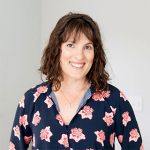 Beth Russell has spent the last 15 years studying how people regulate psychological distress. Her studies examine how individuals and families respond to stress across a range of typical life events (like the transition to parenthood) and atypical experiences (such as raising children in the context of chronic health conditions). Her most recent work focuses on substance use trajectories from adolescence through adulthood and considers how individual substance use intersects with close family relationships (relationship antecedents to substance use, or caregiver burden consequences during active use and recovery). She is currently funded on several teams to develop and test cognitive behavioral interventions that target the regulation of distress as the mediators of substance use and recovery outcomes.
Families are a primary source of socialization that guide individuals during times of stress. Much of the modeling parents and close loved ones provide about how to manage challenges is shaped by these caregivers’ own attitudes about stress and the coping behaviors they have found effective. These effortful actions to modulate a stressful experience are a compliment to the procedural emotion regulation behaviors that may be modeled in a home without explicit intent to “teach” about coping – – alcohol use, for example. Family member supports to cope with stress extend far beyond childhood and are especially needed when facing difficult circumstances. Dr. Russell’s recent work during the COVID pandemic demonstrated that caregivers and younger adults reported exacerbated psychological distress during the pandemic, providing longitudinal evidence from two national survey studies of the differential impacts these groups experienced over a 12-month period. Describing the unique distress and resilience trajectories among subgroups at heightened risk for mental health struggles is an important step in tailoring accessible and equitable interventions for those with the greatest needs.
Beth became the Director of the Center for Applied Research in Human Development (CARHD) in 2018, where she has over a decade of experience directing evaluations of human service programs that provide supports to disadvantaged communities, helping programs identify what works best for whom within their client populations. Her work as Director strives to ensure CARHD is a sustainable interdisciplinary contributor to UConn’s Land Grant Mission, given its mission to enable the development and application of interventions intended to improve quality of life for individuals, families, and communities. Dr. Russell is also an Associate Editor for the Journal of Child & Family Studies, and sits on editorial board for the Journal of Primary Prevention.
Outside of work, Beth spends time with her family, in her gardens, and connecting with friends over good food. Her whole family loves traveling to find the best beaches, jungles, waterfalls, and caves, and is looking forward to tackling a few new adventures together in the post-Covid world.
Samantha Lawrence receives UConn CLAS Scholarship
 Congratulations to graduate student Samantha Lawrence, recipient of the UConn CLAS Christine N. Witzel Scholarship, for “an academically promising…student…undertaking a research project related to women’s health”!
Marlene Schwartz featured in Medical Xpress
 Professor Marlene Schwartz featured in Medical Xpress in an article, Color-coded nutrition info helps food pantry clients choose healthier options. Read the article here.
Rebecca Puhl published in The Washington Post
 Professor Rebecca Puhl wrote a piece published by The Washington Post on weight stigma around the world. Read the article here.
Debra Tomasino working on study as gerontology researcher
 Congratulations to graduate student Debra Tomasino, who will be working on a multi-site study (Yale, Emory, and Northwestern) over the next year as a gerontology researcher on a project focused on improving Emergency Medicine for geriatric patients.
Terry Berthelot joins NAELA News editorial board
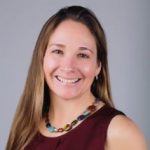 Terry Berthelot, Assistant Professor in Residence, joined the NAELA (National Academy of Elder Law Attorneys) News editorial board.
Marlene Schwartz featured in The Verge
Professor Marlene Schwartz was featured in The Verge for an article, Impossible Foods Eyes Schools for New Customer. Read the article here.
Rebecca Puhl’s article featured in The Conversation, and UConn Today
Professor Rebecca Puhl wrote a piece for The Conversation about weight stigma around the world: Read the article here. The piece was also featured in UConn Today: Read the article here.
Rebecca Puhl’s research featured by CNN
Professor Rebecca Puhl’s multinational research on weight stigma was featured by CNN on June 1st: Read the article here. She was also interviewed by CNN on eating and weight-related issues during the pandemic (June 7th): Read the article here.