Professor
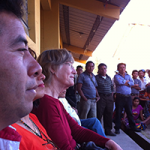 Sara Harkness has always been fascinated by other cultures and languages. As a high school student, she learned to speak Swedish while living with a family in Stockholm and attending high school as an American Field Service exchange student. In college, Sara majored in comparative literature, then taught English language and literature at two universities in Colombia before returning to the U.S. to begin doctoral studies in Social Anthropology at Harvard. Her first research project as a graduate student was a study of children’s acquisition of basic color terms in two different language communities in Guatemala, one Spanish-speaking and the other Mam (a Mayan language).
At Harvard, Sara met and married the love of her life, Charlie Super, and together they travelled to Kenya where for the next three years they carried out research on children and families in a rural Kipsigis village of the western highlands. While there, Sara investigated children’s language socialization, the psychology of childbirth, and moral reasoning among men leaders and non-leaders. After returning to the U.S., Sara and Charlie’s work was supported by a combination of research grants, teaching, and consulting, while writing up their Kenya research and enjoying time with their growing family in Cambridge. Sara also earned a Master of Public Health degree at the Harvard School of Public Health, and subsequently taught in its department of Population Sciences. During this period, Charlie and Sara published a conceptual framework for the study of children’s development in cultural context, the “developmental niche,” which has been widely used by researchers around the world. A further elaboration on the niche idea, “parental ethnotheories,” led to a series of studies on how parents’ culturally shared belief systems are expressed in parenting practices and interactions with their children, and how parents themselves are influenced by other “expert” sources such as pediatricians.
This research agenda continued when the Harkness-Super family moved to central Pennsylvania for jobs in HDFS at Penn State University, but they soon developed a new geographic focus: cultural variability among Western societies. Returning to “the field,” but now in The Netherlands, they discovered that Dutch parental ethnotheories and practices offered a striking contrast with the hyper-focused American middle-class concern with “stimulation.” In particular, the “Three R’s” of Dutch parenting – rust (rest), regelmaat (regularity) and reinheid (cleanliness) – guided parents to avoid too much stimulation and promoted a regular schedule with plenty of sleep as the key to healthy development. A subsequent cross-cultural study of parental ethnotheories and children’s transition to school in The Netherlands, Sweden, Italy, Spain, Poland, Australia, and the U.S. brought Sara and Charlie back to The Netherlands for a full year of research with parents and teachers, in collaboration with colleagues in the other countries.
Upon returning from Europe in 1996, Sara and Charlie began a new chapter in their academic careers with a move to UConn, where Charlie became Dean of the School of Family Studies for what turned out to be its last 10 years of existence, and Sara was appointed as full professor in the same school. Organizational changes at UConn resulted in the School’s becoming a department within the College of Liberal Arts and Sciences, but Sara and Charlie’s research trajectory remained constant. In 2009, their research was recognized by the Society for Research on Child Development by its inaugural award for “Distinguished contributions to cultural and contextual factors in child development.”
A continuing motivation in Sara’s work has been the desire to “make a difference” beyond the creation of new knowledge for its own sake. Together with colleagues in the Neag School of Education, Sara helped lead a GEAR UP project (a federally funded program to promote academic achievement for students in disadvantaged schools), where the team worked with three cohorts at a K-8 school in Hartford, following them through high school to support learning and engagement in education oriented to post-secondary education. This project was recognized in 2006 by an award from UConn for Excellence in Outreach and Public Engagement. In 2012-2013, Sara spent a year in Washington D.C. as a Jefferson Science Fellow, working as a Senior Advisor in Education and Health in the Latin American and Caribbean Bureau of the U.S. Agency for International Development. A highlight of that year was working on a project to promote early literacy development, especially among indigenous children in Guatemala, Peru, Honduras, and Nicaragua. She has also enjoyed working with colleagues at the Connecticut Office of Early Childhood on evaluations of intervention projects designed to support vulnerable families and their children. As director of the university-wide Center for the Study of Culture, Health, and Human Development, Sara developed a graduate certificate program to train doctoral students in inter-disciplinary approaches to issues of health and development in cultural context. Most recently, the CHHD leadership team – including HDFS faculty members Alaina Brenick and Caroline Mavridis, Clewiston Challenger in Counseling Psychology, Saskia van Schaik at Radboud University (The Netherlands) and co-director Charles Super – put together a video entitled Making Voices Heard: Diversity, Disadvantage, and Discrimination in Educational Settings. Funded by a grant from the President’s Commitment to Community Initiative, the video was launched in April 2021 as a Webex Event, with opening remarks by Vice President and Chief Diversity Officer Frank Tuitt, a further note of welcome by President Katsouleas, and over 150 people in attendance including HDFS faculty members and students. The video is now posted on the CHHD website, where it will be available for teaching and training purposes free of charge.
In the summer of 2019, Sara and Charlie returned to the village in Kenya where they had started their research, and their family, so long ago. They were amazed to be warmly welcomed by the people of the village, and they have since established a non-profit organization, Friends of Leldayet Kokwet, to support education at the secondary and post-secondary levels through scholarships for students as well as restoring and equipping schools in the village.
When she isn’t working, Sara enjoys playing her beloved cello, tending home and garden, and visiting with her children and grandchildren. Despite the strictures of the pandemic, Sara is grateful for the wonderful relationships that have blossomed during this time, even if remotely.
 Anne Thompson Heller
 Congratulations to Terry Berthelot (Assistant Professor in Residence), who was selected to receive the 2021 NAELA John J. Regan Writing Award for her article, “Medicare Appeal Navigation,” published in the 2020 NAELA Journal. The John J. Regan Writing Award is presented annually for the best article published in the NAELA Journal during the previous calendar year. The award selection is made by the members of the NAELA Journal Editorial Board.
 Margaret Forgione attended UConn in the 1980’s. While attending UCONN, she was fortunate to have many hands-on experiences that shaped her growth and interest in public service, such as an internship in Hartford at La Casa de Puerto Rico, volunteering at the Mansfield Training School, and serving as a Husky Ambassador in the Admissions office to assist UConn applicants. Margaret says that a public policy course in the Fall of her senior year changed her life by opening up the possibility of working in government and affecting change at a broader level. As a result of this class she applied to Columbia University’s Masters of Public Administration program. Ever since, she’s had a lifelong love of New York City and has been proud to effect change on its streets.
 Graduate student Rachael Farina was selected for one of the 100 Years of Women Scholarship Awards for the 2021 – 2022 academic year from UConn’s Women’s Center. The 100 Years of Women Scholarship fund was established in 1992 to honor a current UConn student or high school senior planning to enroll at UConn who, as a role model and advocate, has advanced the status and contributions of women in society. Rachael was selected for this award in recognition of her outstanding academic achievements, dedicated service, and significant contributions to the advancement of women in society. Congratulations Rachael!
 Congratulations to Louisa Baker (HDFS PhD ’13), winner of the UConn CETL University Teaching Award for Outstanding Adjunct!
 Associate Professor Laura Mauldin, 2021-2022 UConn Humanities Faculty Fellow. Congratulations Laura!
  Morica (Rica) Hutchison is a prevention scientist and marital family therapist. She studies the connections between emotional regulation, distress tolerance, and mindfulness in community-based samples of youth and young adults deemed at-risk due to mental health and/or substance use diagnoses. Rica first discovered her passion for bolstering mental and behavioral health outcomes as an undergraduate when she completed an honors thesis on the emotional regulation and behavior of adolescents in substance use recovery and participated in an internship at an intensive outpatient program for adolescents focused on group and family-based therapy.
 Dr. Alaina Brenick is a scholar-activist dedicated to the interdisciplinary and translational approaches fundamental to the field of Human Development and Family Sciences. Drawing from social and developmental psychology, education, social work, and sociology, she is interested in identifying and examining individual, micro-, and macro-level factors that contribute to intergroup conflict, as well as the conditions necessary for reducing prejudice, discrimination, and victimization across development. Specifically, her research focuses on how diverse groups of children, adolescents, and young adults in the U.S. and in other regions of the world—sometimes with vastly different societal structures, norms, and expectations—experience, reason about, and respond to intergroup relations and group-based victimization (e.g., discrimination, denial of rights, bullying, exclusion based on one’s group membership/identity). She is committed to translating her work into practice. Her work provides a fundamental knowledge base for creating contextually and developmentally appropriate intervention programs, designed to reduce individual prejudice and systemic oppression and promote social equity and positive intergroup relations.