Author: Magnoli, Jennifer

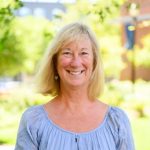
Laura Donorfio, Faculty Spotlight, May 2026

Headshot, Laura Donorfio

Dr. Laura Donorfio has been a part of the HDFS Department since 1989, receiving her MA and PhD with concentrations in adulthood, aging, and gerontology and intergenerational relationships. During graduate school, Laura’s research focused on family caregiving and filial responsibility. Laura was one of the first in her field to qualitatively capture the dyadic, lived experiences of caregiving daughters and care-receiving mothers. Laura also spent time during graduate school working with the Connecticut Departments of Education and Aging on the Connecticut Aging Awareness Project (AoA grant), developing curricula on aging and intergenerational exchange projects to promote education for, with, and about older adults in an aging society. At that time, Connecticut was one of only three states to advance generations’ education through K-12 schools. Upon graduation, Laura was recruited by The Hartford Financial Services Group (HFSG) as a corporate gerontologist and director of qualitative consumer research, conducting primary, applied research with AARP and the MIT AgeLab where she served as a visiting scientist. In this capacity, Laura utilized a myriad of qualitative methods, including facilitating over 400 focus groups nationally. One of her key research projects was a mixed-methods study with the MIT AgeLab involving a national survey of over 10,000 older drivers to help understand how they can continue driving safer for a longer period through utilizing various self-regulation strategies. Laura was featured on both WNPR’s Where We Live and the Connecticut Television Network (CT-N) to discuss this research and the health and safety implications for older drivers and families surrounding various transportation options and the decision to continue driving. During this time, Laura continued to teach at UConn and the University of Hartford. Upon leaving HFSG, Laura took a one year visiting faculty position at UConn’s A.J. Pappanikou Center for Excellence in Developmental Disabilities as a marketing director concentrating on community and political engagement and website development.

In 2004 Laura joined the HDFS department at UConn Waterbury (she believes fate was involved as she was born in Waterbury). It was the first year that students were able to complete one of four-degree programs on the regional campuses and Laura led the establishment and growth of the HDFS major. To do so, Laura worked with UConn’s Center for Excellence in Teaching and Learning (CETL) to develop a unique interactive television (iTV) platform to deliver her courses across three campuses simultaneously, while creating a physical presence, rotating between campuses. During this time, she had the unique opportunity to begin partnering with UConn Waterbury’s Osher Lifelong Learning Institute (OLLI, established in 2006) conducting intergenerational research and generating new and innovative intergenerational curricula and service-learning programs. Generations United Report (2024) recently featured her intergenerational programming as an exemplary in their report of intergenerational Teaching and Learning in Higher Education.

Laura has been deeply involved throughout her career in leading gerontology educators internationally through the Academy of Gerontology in Higher Education (AGHE) and the Gerontological Society of America (GSA). She is currently the elected Chair of the AGHE member group for GSA and holds fellow status in both AGHE (2012) and GSA (2025). She started AGHE’s first Teaching Institute in 2010 and continues to organize and chair it, celebrating 15 years this November. She has chaired multiple committees and interest groups including the Intergenerational Learning Research and Community Engagement (ILRCE) and the Qualitative Research interest groups. At the departmental level, Laura helped develop the HDFS minor in gerontology.

Most recently, Laura co-led an initiative with the UConn Office of Outreach and Engagement to gain member status for UConn in the International Age-Friendly University Global Network (2025). This is an international consortium of institutions advancing policies and practices that foster healthy aging, intergenerational learning, and lifelong engagement. UConn is now among more than 120 universities globally that are reimagining higher education’s role in an aging society. UConn Joins Age-Friendly University Global Network – UConn Today.

Laura’s research interests center on education and pedagogy innovation and intergenerational programming. She is the author of numerous works, including co-authorship of the book “The Gerontology Field Placement: Internships and Practicums in Aging” (2023, Springer Publishing). She has given over 100 scholarly presentations nationally and internationally related to experiential and intergenerational learning, including a taxonomy of risk-taking relative to activities in the classroom, and innovative educational teaching platforms. As a result of appearing with her son on a reality television show called “Dragnificent!” (2020), Laura has developed a research interest on aging drag queens and how drag expression interfaces with dragism, coping, resilience, family, and generativity across the lifespan. In 2024 she was the recipient of the UConn Lavender Award in recognition of leadership for diverse communities of gender identities, gender expressions, and sexualities for her work creating and implementing  UConn’s first ever pride party on the Waterbury campus, now in its fourth year involving other UConn campuses, faculty and staff, and community LGBTQ+ organizations.

Laura has been honored for her many teaching accomplishments, most notably GSA’s Clark Tibbets Award (2022) given each year to one individual internationally who has made an outstanding contribution to the advancement of gerontology/geriatrics education. At UConn, she is a CETL Teaching Fellow (2018) and an Office of Public Engagement Service-Learning Fellow (2016) and has been awarded the CLAS Excellence in Teaching Award (Behavioral & Life Sciences, 2018), the Faculty Excellence in Undergraduate Teaching Award (UConn Foundation Office of Alumni Relations, 2019) and the American Association of University Professors Faculty Excellence for Teaching Career (2023).

Outside of work, Laura is a certified educator for the Archdiocese of Hartford’s Adult, Teen, and Child Lures Prevention Program, having educated over 2,200 individuals on sexual predator awareness and safety. On the homefront, Laura has 25-year-old twins and an 11-year-old bearded dragon named Tina. When time allows, Laura enjoys engaging in house projects and gardening, spending time with family and friends, and having deep conversations about the intrigues and mysteries of life.

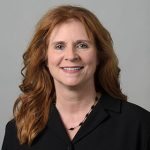
Rebecca Puhl, Faculty Spotlight, April 2026

Headshot, Rebecca Puhl

Dr. Rebecca Puhl is a Professor of HDFS and Deputy Director of the UConn Rudd Center for Food Policy & Health. She joined the HDFS faculty in 2015.

Rebecca was born and raised in Ontario, Canada. She completed her BAH in psychology at Queen’s University in Kingston, Ontario, and then moved to Connecticut in 1999 to attend Yale University where she completed her MA, MS, and PhD in clinical psychology. She completed her clinical psychology internship at the VA Connecticut Healthcare System, and then returned to Yale as research faculty in the Department of Psychology and as core faculty of the Yale Rudd Center for Food Policy & Obesity (founded in 2005). In 2015, after 10 years at Yale, the Rudd Center joined UConn’s Institute for Collaboration on Health, Intervention, and Policy (InCHIP). UConn’s commitment to multi-disciplinary scientific collaboration and research on health and wellness provided new and ideal opportunities for the Rudd Center to further its mission and contribute to the national research reputation of the university.

Since 2001, Rebecca’s research has addressed weight-based stigma, bullying, and discrimination. Her research has examined weight-based bullying in youth, the impact of weight stigma on emotional wellbeing and physical health, weight stigma within families, health care, and the media, and policy-level strategies to reduce weight-based bullying and discrimination across multiple societal settings. To date, she has authored more than 220 peer reviewed scientific publications and 24 book chapters on these topics. Her research, supported by more than $12 million in external funding, has utilized diverse methodologies including randomized control experiments, population-based studies, survey research, and psychometric investigations. As a national research expert on weight stigma and discrimination, Rebecca has testified in state legislative hearings on weight discrimination and provides expertise on strategies to reduce weight stigma to national and international health organizations. She has also developed evidence-based trainings to reduce weight bias in health care that have been implemented in medical facilities across the U.S., and her work is regularly cited in the national media.

Rebecca has been recognized with national and international awards such as The Obesity Society’s Scientific Achievement Award for Excellence in an Established Research Career; the Excellence in Policy Research Award from the National Eating Disorders Coalition, and Obesity Canada’s Distinguished Lecturer Award. At UConn, she has been the recipient of multiple awards including UConn’s Faculty Excellence in Research Award in Public Scholarship, the AAUP Excellence in Research and Creativity Career Award, the HDFS Faculty Excellence in Mentoring Award, and the HDFS Faculty Excellence in Research Award. In 2021, Rebecca’s Scholarship placed her on the Clarivate list of the world’s most highly cited researchers.

Outside of work, Rebecca enjoys spending time with her husband Kyle and their two sons. She also loves hiking, baking, photography, reading, and creating small art pieces from sea glass she collects along the coast of Maine.

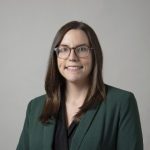
Leslie Curry, Alumni Spotlight, April 2026

Headshot Leslie Curry

Leslie is Professor Emerita of Public Health (Health Policy and Management) at the Yale School of Public Health. She also has a secondary position as Professor of Management at the Yale School of Management, a courtesy position as Professor in the Jackson School of Global Affairs, and serves as Core Faculty at the Yale Global Health Leadership Initiative and Lecturer at Yale College. She is especially interested in the scale up of innovative, evidence-based practices, programs, and policies to address health inequities and bring 30 years of expertise in implementation science and mixed methods to these questions. Together with colleagues Bradley and Krumholz, she developed a ‘positive deviance’ approach to study hospital care (which has been highly influential in academic journals) and has also applied this method in studies on medical and social care integration. She also co-led the development of a novel model of scale up of innovations commissioned by the Gates Foundation, the AIDED Model of Diffusion. Her work has been published in some of the most prestigious academic journals and featured in The New York Times, Wall Street Journal, NPR and ABC News. She has been engaged in teaching and mentoring physicians at the pre-medical undergraduate, graduate, and postgraduate levels since 1993 and is passionate about supporting the next generation of scholars and teachers. She is grateful to her own mentors from UConn, Steven Wisensale and Thomas Blank.

Leslie’s current primary research portfolio includes projects addressing structural racism and drive measurable reductions in inequities in sepsis outcomes, preparing ICU leadership in Australia and New Zealand to drive transformation in clinical performance and collaborations to increase diversity in the biomedical workforce.

Leslie lives in Killingworth, CT with a menagerie of animals, courtesy of her very persuasive daughters, now 23 and 25 and living elsewhere, while she continues to muck the stalls!

Rebecca Puhl receives grant from Eli Lilly & Company

Headshot, Rebecca Puhl

Rebecca Puhl (PI) received a grant “Equipping Pediatric Health Professionals with Tools for Change: Confronting Weight Bias and Improve Obesity Care in Pediatric Settings”. This 2-year project funded by Eli Lilly & Company is supporting the development of a comprehensive evidence-based online resource for pediatric professionals to reduce stigma and improve supportive patient care to youth with obesity.

Dr. Katherine R. Allen, Alumni Spotlight, March 2026

Headshot Dr. Katherine R. Allen

I graduated from UConn in 1976. I received a Bachelor of Science degree in Child Development and Family Relations (now HDFS), with a minor in Sociology. Going to UConn in the mid-1970s was a time of great social change as well as the opportunity to experiment with new ways of pursuing knowledge. I entered college as a dietetics major at San Diego State University, and then my family moved to Guilford, Connecticut, and I applied to UConn. Ever since I was young, I have always been invested in social justice, women’s issues, and the underbelly of family life. To please my parents, I switched majors to accounting, but never quite felt that my ambition to excel was in sync with my passion for learning about issues that truly mattered to me. I am grateful that I eventually found my way to HDFS, where I have pursued my career as a family scholar and activist. These past 50 years have flown by, and I can still vividly conjure what happened to me when I decided to major in CDFR (HDFS).

In the second semester of my junior year (which was my first year in Storrs because I had attended a regional campus during my sophomore year), I enrolled in a large class called Parenthood. As soon as the first lecture began, I felt a light bulb turn on in my brain. I also took classes on Family Relationships and Advanced Child Development in which I felt like I had come home intellectually. I don’t think I ever missed a class. At UConn, I was exposed to theorists and researchers who profoundly shaped my thinking and research trajectory. I also took several influential courses in Sociology, including one of the first Women’s Studies courses offered nationally, Sociological Perspectives on Women, as well as a course about racial and ethnic groups, entitled Intergroup Relations. I was very active in the Women’s Center and joined a Consciousness Raising (CR) Group of women students, faculty, spouses, and community members. That CR group was life changing and first introduced me to a concept I have honed throughout my career: the personal is political (to which I now add the word, professional). My senior year was exceptionally exciting and truly prepared me for graduate school. I was encouraged by several professors to begin my methodological training by conducting a year-long project I called, “Feminism and Intimacy” in which I interviewed 10 feminist couples about their marital dynamics and division of labor. At the time, qualitative research methods courses in HDFS did not exist, but my trusted professors encouraged me to pursue my desire to figure out how to do an in-depth interview study. In addition, I completed an independent study with several professors and graduate students on the topic of “Middle-aged and Older Women”, thus beginning my lifelong investment in family gerontology. I credit my experience at UConn for starting me on my journey as a critical intersectional reflexive feminist family scholar.

After UConn, I served for a year as the coordinator of the Retired Senior Volunteer Program (RSVP) in the northeastern part of Connecticut. Then I went to Syracuse University and earned my PhD in 1984, in Child and Family Studies, with a Certificate in Gerontology. My first academic job was at Texas Woman’s University, and then I came to Virginia Tech in 1989, where I was a professor until I retired in 2020. I have published more than 200 scholarly articles and book chapters and written or edited 10 books. Recent books include Family Theories Today: A Critical Intersectional Approach (2023; 2nd ed.) and LGBTQ-Parent Families (2020, 2nd ed.). My long-time collaborator, Dr. Abbie Goldberg and I are publishing a book this year which elevates the reflexive component of scholarship, entitled, Opening Family Secrets: Stigma, Shame, Stress, and Strength. In this edited volume, through personal and professional narratives, we unveil the complexity of living through some of the most challenging yet invisible aspects of family life.

A key component of a rewarding retirement is to have something meaningful to retire to, which I found through continued research and writing. In 2023, I became Editor-in-Chief of the Journal of Family Theory & Review (JFTR), which is one of the three journals of the National Council on Family Relations. I am excited to report that JFTR is now ranked #2 out of 66 journals in Family Studies, with an impact factor of 4.5 in the year 2024 (Journal Citation Report). I love editing JFTR because it provides me with the opportunity to cultivate the very best work among interdisciplinary family scholars as well as to mentor junior scholars and students in crafting knowledge that will have an impact in their own lives and in the field. Many of our authors, reviewers, and editorial board members are UConn affiliated.

Now I live in the Appalachian Mountains and still pursue many of the same passions that peppered my day as an undergraduate student at UConn 50 years ago. I still feel the intellectual excitement of the classroom, the charisma of my teachers and their wonderful encouragement to try out the new and the impossible. My experience at UConn provided me with both a training ground and a safety net that has launched an exciting and productive career that even in retirement is still flourishing. Theirs is the model I followed with the thousands of students I have taught over the decades, and it continues to guide my practice today.

Tochukwu Okolie, Graduate Student Spotlight, March 2026

Headshot, TC Okolie

Tochukwu (TC) is a first year Ph.D. student in Human Development and Family Sciences, specializing in Adulthood, Aging, and Gerontology. His academic advisor is Dr. Candi Nwakasi. TC earned his Master’s degree in gerontology from Miami University in Ohio and holds a Bachelor of Science degree in social work from the University of Nigeria, Nsukka. TC’s academic journey reflects a commitment to aging, and family caregiving, particularly in underserved communities such as in rural places where resources for aging adults are limited.

Primarily, TC’s interest in gerontology stems from his relationship with his grandma. As a young child who spent most of his summer holidays with his maternal grandma in the village, he became fascinated by his grandma’s resilience even though she was/and is still living with a chronic disease. With time, TC became concerned about his grandma’s wellbeing given the lack of formal infrastructure to support her aging experience, and he quickly realized that his grandma was not alone. In fact, her experience was common among older adults in Nigeria, especially in rural settings. Therefore, TC became invested in understanding aging issues in Nigeria and beyond. Secondarily, TC owes his commitment to gerontology as an academic field to his professors from his undergraduate education, and mentors who have contributed to his career growth in the field of gerontology.

TC loves to be actively involved in community service whenever he can. He served as Community Integration Officer (CIO) for the Nigerian Students’ Association at Miami University. He is also a member of Dibịa Akwụkwọ: Social Solutions Research Group (SSRG), a group of young emerging scholars who engage in supervised research. TC loves football (soccer) and is an ardent “Red Devil” (Manchester United fan).

Isabelle Aragon-Menzel, Graduate Student Spotlight, March 2026

Headshot, Isabelle Aragon-Menzell

Isabelle Aragon-Menzel is a first-year PhD student specializing in Health, Wellbeing, and Prevention. Prior to coming to UConn, she earned her Master of Public Health (MPH) at the Colorado School of Public Health on the CU Anshutz Medical Campus, specializing in Population Mental Health and Wellbeing; and earned her BA at Colorado College, majoring in Sociology and double minoring in Education and English. During her MPH experience, Isabelle worked with her advisor on a mixed-methods needs-assessment on early adolescent mental health status in Darjeeling, India. The findings from the project were used to inform a community-based prevention program centering around community gardens. Additionally, Isabelle facilitated a pilot program for STEM-based learning with community partners in Denver through her work at the Hub for Justice-Centered Youth Engagement. Through this work, Isabelle has developed a passion for research surrounding adolescents’ mental health, community-based participatory research, and qualitative methodology.

At UConn, Isabelle is working with Dr. Beth Russell and the Center for Applied Research in Human Development (CARHD). As a doctoral student, she hopes to expand her research on adolescent mental health and applied research, focusing on specific adolescent mental health outcomes such as suicidality, substance use, non-suicidal self-injury, stress, and coping. She is currently a research assistant for two projects in Dr. Russell’s lab: the Connecticut School-Based Diversion Initiative and 21st Century. Over the course of her doctoral experience, she hopes to learn with and from her peers, gain experience in classroom-teaching, and develop her identity as a scholar, researcher, and lifelong learner. Her long-term goals are to conduct meaningful research and earn the opportunity to be a professor one day. Anchoring these goals are her core values of love, humanity, and equity for all.

Isabelle is a proud Minnesotan (brr!) but has called Colorado a second home for the past several years. In her free time, you can always find her working on a puzzle and watching a comfort TV show (for cold weather) or enjoying a run/walk/hike in the sun while listening to some good music (for warm weather). For all weather, spending time with loved ones – old and new – remains her favorite pastime!

Marianne Legassey, Faculty Spotlight, March 2026

Headshot, Marianne Legassey

Marianne Legassey is the Executive Director at the UConn Child Development Labs (CDL).  She started at the CDL as a classroom Master Teacher in 2004.  The dynamic classroom environment and need to manage many tasks simultaneously prepared Marianne for the challenge of being the director at CDL, a role that requires many hats.

At the CDL, HDFS Early Childhood Specializations (ECS) students receive mentoring and coaching in early childhood education.  Students who go through the ECS program in Storrs receive training by the teaching staff at the CDL, preparing them for work with children and families in their future careers.  Students from various UConn programs utilize the CDL for experiential learning opportunities.  Marianne and the CDL professional teaching staff welcome collaborations with Physical Therapy, Speech and Hearing, Psychology and other departments.  The CDL also employes student workers interested in working with young children.

As the CDL Director, Marianne hopes to establish a space on campus where all are welcomed and affirmed.  The goal is to support college students, children and families with high quality training, care, education and support.  Marianne utilizes trauma informed practices to provide a safe space and trusting relationships at the CDL.

Marianne and her family live, work and go to school in Storrs.  Marianne is a UConn alum, employee and parent.  She has held the roles of HDFS student with multiple placements at the CDL, CDL Master Teacher in multiple age groups, CDL parent, and most recently CDL Executive Director.