 Professor Rebecca Puhl was featured in The Asian Parent article, Mums, Are Your Words Causing Your Child to Develop Eating Disorders? Read the article here.
Faculty
Na Zhang, HDFS Faculty Spotlight, October 2020
Assistant Professor
 Dr. Na Zhang is a prevention researcher and family scholar. At the center of her work is the intersection of mindfulness and parenting interventions. In her research she examines the biopsychosocial determinants of parenting behaviors and evaluates parenting interventions’ effects on improving children’s mental health, mechanisms of change, and implementation processes. In particular, she is interested in studying how parents’ self-regulation influences parenting, how these variables impact parents’ responsivity to interventions, and how to strengthen intervention effects for those who do not benefit. One way to strengthen interventions is to integrate mindfulness training to address parents’ self-regulation and mental health.
Na discovered her passion for scientific research during her study at Tsinghua University, where she gained training in clinical science with a focus on group-based interventions. For her Master’s thesis she delivered and evaluated an 8-week mindfulness-based intervention to reduce loneliness in college students. While she was preparing to study abroad, she was a director of positive youth development programs at a corporate company and she enjoyed working with children and adolescents. She came to the United States in 2014 as an international student. During her doctoral study at the University of Minnesota and postdoctoral training at Arizona State University, she worked with secondary datasets of randomized controlled trials of different parent training programs. These programs focused on teaching practical skills such as behavior management and positive parent-child relationships. What Na noticed was that these parent training programs were missing the “inner work” of parenting – being non-reactive, compassionate, flexible, patient, and non-striving. She began to focus her research on integrating mindfulness to enhance evidence-based parenting programs. For example, she is working on a narrative review paper to discuss her work with investigators at Arizona State University integrating self-compassion into an evidence-based parenting program for parentally bereaved families.
Na practices mindfulness meditation and gained training in delivering mindfulness-based stress reduction program. She hopes to become a certified teacher someday. She co-translated the Chinese version of the book The mindful way through depression: Freeing yourself from chronic unhappiness. The longest silent teacher-guided meditation retreat she has attended was 10 days – no phone, no computer, no books, no talking, just sitting and walking meditation sessions. It was healing and unforgettable. Now she is on another non-silent baby-guided meditation retreat – much more challenging and longer, but unbelievably rewarding.
Na loves writing, reading, watching movies, traveling to new places, and gardening. Her Japanese skills were very good until she stopped practicing. She has two cats and no siblings.
HDFS graduate students and faculty will present at the NCFR Conference, November 2021
Four HDFS graduate students and four HDFS faculty will be presenting their work at the 2021 National Council on Family Relations (NCFR) Annual Conference in November. See all of their presentations here.
Rebecca Puhl’s study covered in US News and World Report, and UConn Today
Professor Rebecca Puhl’s recent study on weight stigma and health behaviors during COVID-19 was covered in US News and World Report and in UConn Today (read the article here).
Caitlin Lombardi interviewed in a UConn Today podcast
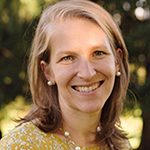 Assistant Professor Caitlin Lombardi was interviewed in a UConn Today podcast. (Listen to the podcast here)
New HDFS faculty member, Jolaade Kalinowski, featured in UConn Today
 New HDFS faculty member, Assistant Professor Jolaade Kalinowski, was featured in UConn Today (Read the article here)
Rebecca Puhl’s research on weight stigma featured in Scientific American
Professor Rebecca Puhl‘s research on weight stigma was featured in Scientific American in an opinion piece discussing the “war on obesity”. (Read the article here)
Rachel C. Cohen, HDFS Faculty Spotlight, September 2020
Associate Professor
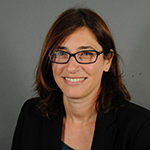 Throughout her career in government and academic settings, Dr. Rachel Chazan Cohen has worked to bridge the worlds of policy, practice, and research in early childhood. She aims to bring cutting-edge research to decision makers who make state and federal policies and to professionals who work directly with children and families. Her own research focuses on the biological, relational, and environmental factors influencing the development of children, and on the creation, evaluation, and improvement of intervention programs for families with infants and toddlers, including home visiting, child care, and Early Head Start.
While in the federal government, Rachel was the federal project officer for the Early Head Start Research and Evaluation Project, a large experimental study of the impacts of this federal program for children and families. She and her colleagues recently competed a follow up study of this sample and found long term impacts on reducing child maltreatment as a result of earlier impacts on parents and children.
Examples of her state level policy work include her current projects developing a competency-based credentialing system for child care providers in Massachusetts, and conducting a scan of the California home visiting workforce to inform improvements in the infrastructure supporting the workforce.
She is particularly interested in the competencies necessary for success in working with families with young children and how to build competencies through pre- and in-service training. She is a founding member of the Collaborative for the Understanding of the Pedagogy of Infant/Toddler Development (CUPID), a consortium of university-based researchers studying the teaching of infant/toddler development courses. Given this interest she is especially excited to be joining the early childhood team at UConn, who excel at preparing students to enter both the early childhood education workforce as well as other careers working with children and families.
Rachel is the scientific director of the National Research Conference on Early Childhood and coordinator of the Network of Infant Toddler Researchers, both funded by the Administration for Children and Families in the US Department of Health and Human Services. She is also on the editorial board of the Infant Mental Health Journal.
Outside of work, Rachel spends time with her family, Dan, a historian, their teenage twins and their energetic puppy. They enjoy biking, hiking, and cooking together. During Covid they have improved their cooking skills (and perfected many potato recipes) and are planning to start making wine in the basement.
Kimi Ego and Michael Ego’s work discussed in the Register Citizen
Kimi Ego, sister of our deceased colleague Professor Michael Ego, has been continuing some of Michael’s work on baseball reminiscence. Kimi’s work and Michael’s program were recently discussed in the Register Citizen.
Rebecca Puhl in Huffington Post article and featured in CBS documentary
Professor Rebecca Puhl was quoted in a Huffington Post article on how to instill a healthy attitude about exercise in children, and was featured in the CBS original documentary “Speaking Frankly/Fat Shaming”.