
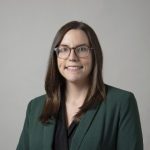
Kay Camerato holds both a BA in HDFS and an MA in Higher Education and Student Affairs from UConn. As a Connecticut native and first-generation college student, Kay deeply values the experiences and learning opportunities she gained during her time at UConn.
To support herself financially while developing transferable skills, Kay actively engaged in a variety of student roles, including serving as a resident assistant and student tour guide, creating a programmatic internship within the Puerto Rican/Latin American Cultural Center, and serving as Co-Program Director for Cross Cultural Connections. Through these experiences, Kay developed a strong interest in the field of Higher Education and Student Affairs. During her graduate studies, Kay co-published What does “high-impact” mean in extracurricular experiences? (Camerato et al., 2019). While publishing was not initially a professional goal, she pursued the opportunity with confidence, drawing on the academic foundation she established as an HDFS student—particularly in HDFS 2004W: Research Methods in Human Development and Family Studies.
Throughout her career, Kay has held leadership roles across multiple functional areas, including Residential Life, Women’s Center work, and diversity, equity, and inclusion initiatives. Her professional experiences span a range of institutional types, including Research 1 universities, public flagship institutions, private liberal arts colleges, two-year colleges, and women’s institutions.
Kay currently serves as the Associate Director of the Office of Student Care and Concern (OSCC) at UConn. She describes this role as the culmination of her professional experiences, as it allows her to work directly with students to provide individualized support, lead educational and training initiatives, conduct assessment, and improve systems and processes. OSCC oversees the Student Care Team, UConn’s Behavioral Threat Assessment and Management (BTAM) team, serving students across the UConn system, including regional campuses, non-degree students, and most graduate and doctoral programs.
Since its founding in 2019 with two full-time staff members, OSCC has expanded to include five full-time staff at Storrs and six case managers across regional campuses. One component of Kay’s role is leading community education initiatives. Over the past academic year, the OSCC team has engaged in more than 4,500 individual touchpoints with students, faculty, staff, and administrators through educational programming.
Kay is certified in the National Threat Evaluation and Reporting (NTER) Program’s Threat Evaluation and Reporting Course, which focuses on BTAM best practices to help prevent targeted violence. She is currently pursuing the NTER Master Trainer certification, which will enable her to deliver certification courses and expand access to critical training across the UConn community and beyond. She is committed to continuing to grow OSCC’s impact and advancing a culture of care across the university.
Kay values the power of mentorship, both as a mentee and mentor. She maintains strong mentoring relationships and welcomes opportunities to support others seeking guidance. She is particularly passionate about connecting with women and fostering meaningful dialogue in both formal and informal settings. She regularly presents at UConn conferences, including the Women’s Advance Conference and the Annual Conference on First-Year Student Success, to give back to her community.
Outside of her professional work, Kay enjoys traveling with her fiancée, spending time with her cats, Roux and Barry, and exploring new recipes. She is passionate about practicing realistic and sustainable self-care, regularly engaging in yoga and Pilates. She also enjoys creative expression through art and has recently focused on designing and creating embroidery projects.




 Annika Anderson, MPH, earned her B.S. in HDFS in 2020 and her Master of Public Health from UConn in 2022. With aspirations in healthcare, Annika appreciated learning about the socioecological model of health in HDFS, which recognizes that 90% of child health outcomes are influenced by a complex interplay of social and structural drivers.
 Dr. Starlin Astacio