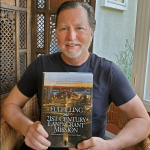
 Stephen M. Gavazzi graduated in 1986 with his master’s degree in Marriage and Family Therapy prior to completing his Family Studies doctorate in 1991. Upon graduation, he accepted a position at The Ohio State University, where he has remained for the past 30 years. For many years, Steve’s scholarship remained closely connected to two of his committee members – UConn professor emeritus Steve Anderson and UConn professor emeritus Ron Sabatelli – with a strong focus on issues pertaining to families with adolescents. After publishing 50+ articles on this topic, Steve’s first book – Families with Adolescents: Bridging the Gaps Between Theory, Research, and Practice – was published by Springer Press in 2011. His service in two administrative positions – as Director of The Ohio State University’s Center for Family Research and Dean of Ohio State’s Mansfield regional campus – ignited an interest in the topic of land-grant universities, with a special emphasis on the community engagement activities that are embedded in the land-grant mission. Steve’s first book on this topic – Land-Grant Universities for the Future: Higher Education for the Public Good – was co-authored by West Virginia University president E. Gordon Gee and published by Johns Hopkins University Press in 2018. A second book on the public’s perceptions of higher education – titled What’s Public About Public Higher Ed? – written by Gavazzi and Gee will be published by Johns Hopkins University Press in early fall 2021. Most recently, Steve has focused his attention on the debt that land-grant universities across the country owe to Native American tribes. That is, the “land” in “land-grant” came from broken treaties and acts of violence perpetrated on Indigenous peoples. This “Original Sin” of the land-grant universities is the subject of several new publications that Steve has written. Currently, he is leading a research project that engages Tribal Leaders in discussions about the reparative actions that land-grant universities can take in service to healing the harm caused by these historical atrocities.
Author: Janice Berriault
Marlene Schwartz featured in UConn Today and bakeryandsnacks.com
 Professor Marlene Schwartz was featured in UConn Today for her work developing a toolkit to support food banks and pantries to measure nutritional quality (read the article here). Marlene was also featured in Bakery and snacks.com in an article, Some of the Science Behind Our Snacking Habit (read the article here).
Ronald Rohner granted status of Fellow of the Eastern Psychological Association
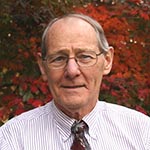 In recognition of significant and sustained contributions to the science of psychology, the Board of Directors of the Eastern Psychological Association has granted Ronald P. Rohner the status of Fellow of the Eastern Psychological Association.
Marlene Schwartz was featured on Food Issues
Professor Marlene Schwartz was featured on Food Issues with Julie Relevant, Episode 001: Feeding Kids in 2021
Alumni Nicholas Koberstein receives the 2021 Award for Outstanding First-Year Student Advocate
 Congratulations to Dr. Nicholas Koberstein (Ph.D., 2016), who received the 2021 Award for Outstanding First-Year Student Advocate from the National resource Center (NRC) for the First-Year Experience and Students in Transition. Dr. Koberstein is the Founding Associate Professor of Child and Family Studies at Keuka College. Learn more about Dr. Koberstein and the award here: https://www.keuka.edu/blog/keuka-college-professor-receives-national-first-year-student-advocate-award
Lauryn Ashong represents HDFS, Stamford, and UConn at public hearing
 Check out Lauryn Ashong’s testimony at the Appropriations Public Hearing on Higher Education Agencies. Lauryn is an HDFS major on the UConn Stamford campus. What an awesome representative of HDFS, Stamford, and UConn. You can listen to her testimony here (should autostart at the right time, but if not, it’s at 1:07:47): https://youtu.be/5CNiQ_Z7svY?t=4067
HDFS faculty & grad students will present at SRCD conference
14 HDFS faculty and 15 HDFS graduate students will be giving 26 presentations at the SRCD Virtual conference, April 7 – 9. Topics include parental control and Chinese adolescent’s depression; anti-racist interventions with Palestinian/Jewish Israeli individuals; avoiding ethnocentrism in research; math skill development in early childhood; and more than 10 presentations related to child, adolescent, college student, and parent well-being during COVID-19. Find a list of all of the exciting talks and posters here
Jolaade Kalinowski featured in UConn Today
 Assistant Professor Jolaade Kalinowski was featured in UConn Today for her important research on Health Disparities for Black women. Read the article here.
Marlene Schwartz’s article featured in multiple newspapers
Professor Marlene Schwartz was featured in US News & World Report, The Conversation, and many other newspapers in a recent story, How Connecticut Schools Have Gotten Lunch to Kids Who Need it. Read her story in The Conversation.
Isabella Otoka, Aetna Writing winner in the Disciplines Awards
A research paper that undergraduate student Isabella Otoka wrote for HDFS 2004W in Spring, 2020, Panic Disorder and Parent Child Communication was selected as the winner of the Aetna Writing in the Disciplines Awards in the social sciences division. Congratulations!
Professor Edna Brown was the instructor, and graduate student Mackenzie Wink was the TA who nominated Isabella. The Aetna Writing in the Disciplines Awards recognize exemplary academic writing by undergraduate students across the sciences, social sciences, humanities, and professional schools. Each of three winners will receive $200, thanks to funding from the Aetna Chair of Writing Endowment.