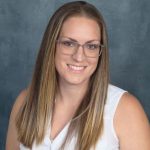
 Since graduating in 2008, Tonya has already made an impact in the world of early childhood education and her influence only continues to grow. She credits this success to her time in HDFS at UConn. Tonya came to UConn excited about majoring in HDFS with a concentration in Early Childhood Development and Education and participating in the work-study program at the UConn Child Development Labs. Her classwork with top-notch professors and mentors who weren’t afraid to be progressive, the hours she spent in the amazing Child Labs, and her years as president of the HDFS Undergraduate Committee, were foundational to her future success. Her study of child development, families, diversity, and curriculum set the stage for her advocacy for high-quality and equitable childcare across several states and settings. With a desire to dive more deeply into teacher certification to enable her to serve young children with special needs and in urban settings, Tonya completed a Master’s in Early Childhood Special Education from Southern Connecticut State University in 2012. Tonya strove to acquire a range of experiences to decide where she could have the most impact and to understand experiences of children in different socioeconomic and ability groups. Her full-time work was at a private school in the PreK program. During several summers and weekends, she worked at the Hole in the Wall Gang Camp for kids with chronic illnesses. She completed student teaching in urban settings within public school elementary classrooms as well as an inclusive Head Start classroom. During graduate school, Tonya completed a summer with Semester at Sea studying Multicultural Education to expand her understanding of early childhood education globally. Tonya then joined Teach For America in New Orleans to work on the complex and urgent educational inequity movement happening there. She started working in one of the most challenging schools in the city. Tonya then moved to a progressive charter management organization called ReNEW Schools where they were starting an early childhood program directly related to her graduate school work. She started in their first early childhood center that would feature classrooms with both students with special needs and typically developing students (often referred to as a collaborative model). Over her eight years with ReNEW, Tonya became Center Director, then Curriculum Specialist, then Instructional Coach for all early childhood programs, and then Director of Early Childhood Programs. Tonya led the original center as well as two additional centers she started with the organization, several public preschool and pre-k grant programs, and a city-wide early intervention program. Tonya led all programs to have high-quality scores on state-wide quality assurance measures ensuring positive early education outcomes that could change the trajectory of young children’s lives. Under her leadership, ReNEW Schools provided fair wages and full benefits for all full-time early childhood educators. Her high standards for herself, the teachers and leaders she mentored, and her programs were grounded in her early work in HDFS and at the Child Labs. She constantly seeks growth and learning for herself but her foundations for what is right for kids and what is possible for them is rooted in the content, mentoring, and experience that she received at UConn from mentors like Anne Bladen, Meg Galante-DeAngelis, Fabienne Doucet, and Kate Andrew.
In 2019, Tonya started a family and relocated to Pennsylvania where she started a consulting firm, Teach Reach Master Consulting, that serves childcare centers, school systems, and families nationally to provide training and coaching. She continues to stretch her impact at local and national levels through providing training to promote the implementation of high-quality interactions, higher-order thinking, and equity-based leadership. Tonya’s time at UConn allowed her to be outside of her comfort zone and lead others. Those challenges provided her the confidence and courage to continue to face larger challenges and adversity after college. She was mentored by women who held the bar high regarding interacting and teaching students to help them meet their highest potential every day. The experience, courage, and confidence she built at UConn, has helped Tonya influence many children and to ensure that ALL children have access to the highest quality of early childhood education.
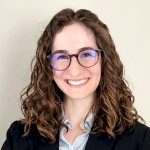 Alum Sam Lawrence (PhD, ‘22), was awarded the RFS Award in Science for the best paper by a woman in science or underrepresented minority in a Liebert peer-reviewed journal. Sam’s paper Bullying involvement at the intersection of gender identity, sexual orientation, race/ethnicity, and disability: Prevalence disparities and the protective power of school-related developmental assets” was published in LGBT Health, and can be found here:
 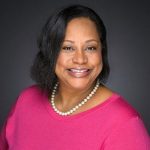 Cheryl Hilton, a UConn graduate from 1991 with a BS in Human Development and Family Relations (HDFR) with a concentration in social policy and public relations, has made significant contributions in various fields. During her time at UConn, Hilton was actively involved as a Husky Ambassador, Campus Tour Guide, and an active member of the H. Fred Simons African American Cultural Center.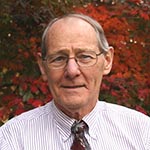

 Mamta is originally from India and moved to the United States in her late twenties. Before moving to the US, she received her master’s degree in child development from the University of Delhi and worked as a lecturer at MS University in Vadodara, Gujarat, as a consultant at IGNOU, and as a research assistant in the area of developmental disabilities at Lady Irwin College. After relocating to the US, she worked as a substitute teacher and afterschool director in California and a preschool teacher in Connecticut. These roles provided her with practical experiences and a socio-cultural systems perspective of the field.
 Congratulations to Dr William J. Doherty (PhD ’78) on his 2024 retirement after 38 years on the faculty of University of Minnesota! Dr. Doherty is also a past president of NCFR. Learn more about Dr. Doherty here:
  Melissa Lovitz graduated in 2015 with a BA in HDFS and a minor in public policy. At UConn, she participated in the HDFS honors program, which was a highlight of her undergraduate experience. The major’s small cohort of honors students and the individualized attention from her thesis advisor, honors advisor, and teaching assistants were unforgettable. Her experience writing an undergraduate thesis was a catapult into a lifelong journey of studying and teaching about families and children. Her honors research focused on family engagement in education and used approaches inspired by community-based research that highlighted parents’ voices. Nearly 10 years later, she is still researching this topic!
 Suzanne came to UConn with a BS in psychology from Penn State University hoping to become a therapist. She enrolled in the UConn HDFS master’s in Marriage and Family Therapy program. She selected the Marriage and Family Therapy degree because it meant she wouldn’t have to get a Ph.D. to practice. The irony of course is she did get a Ph.D. at UConn in Family Studies with a specialization in Marriage and Family Therapy. Her time at UConn was foundational and challenging. She started the master’s program with no idea about HDFS or Marriage and Family Therapy and quickly, thanks to her professors, became immersed in both. She had worked in a research lab as an undergraduate but wasn’t passionate about research until taking the first research methods course in HDFS. From that she got the “research bug” and hasn’t looked back since. Although the thesis was optional in the MS program, she did a thesis, collecting her own data from multiple family members. She took courses with many of the professors, and Ron Sabatelli said he was particularly impressed with her work and asked if she would consider a Ph.D. She said yes, still not really knowing what she was going to do with her life. She completed the Ph.D. with Ron Sabatelli as her advisor, and Rob Ryder and Steve Anderson as her committee members. They were very supportive, and they wrote other manuscripts together. She had some publications when she completed her degree. She went off to “save the world” with research and got a position at a research contract firm in the DC area. She hated it, and through contacts at UConn, got the opportunity to be a visiting professor at Virginia Tech’s Falls Church campus in a Marriage and Family Therapy master’s program. As soon as she got back into academia and started to teach and mentor students, she knew she was where she belonged. Again, through contacts at UConn, she applied for and got her current position at The Ohio State University as a professor in their Couple and Family Therapy Program.
 Susana Herrera (BA ’18) is the new Program Coordinator of Connecticut CASA. Since her time at UConn, she earned an M.S. in counseling and worked at UConn as a Student Services Program Coordinator.
 Amber Eddy-Martinez, a 2020 UConn graduate with a B.A. in HDFS, showcased her commitment to underprivileged youth during her time at UConn, contributing over 300 hours to a church-run early learning center in Norwalk, CT. Her engagement extended to UConn’s Husky for a Day program, where she provided prospective students with insight into academic programs.