 Dr. Shannon Weaver came to UConn in 2002, excited to join a faculty whose members included experts in family policy and dynamics and whose work she had reviewed while studying for her degrees in HDFS. Shannon became interested in HDFS like many of the majors here, when she took a lifespan development course that was required for her major at the time (nursing). After taking this class, Shannon declared an HDFS major and went on to complete both a BS and MS in HDFS with a concentration in Gender Studies and a PhD in Human Environmental Sciences, Human Development and Family Studies at the University of Missouri.
As her first experience with HDFS was with a lifespan course, Shannon greatly enjoys teaching HDFS 1070 Individual and Family Development in both large lecture and smaller online formats. She is also the Faculty Coordinator for the Early College Experience offering of HDFS 1070 in high schools across Connecticut. Frustrated by the lack of family material in most traditional human development texts, in 2018 she published a textbook to create a more inclusive and engaging reading experience for students. Years ago she created and proposed the popular HDFS 1060 Close Relationships Across the Lifespan course, which she continues to teach. Shannon values opportunities to engage students in learning material that will benefit them in their future professional and personal lives. Because she promotes student understanding by relating concepts to their own experiences and popular media, she was excited to be able to combine her two favorite interests, HDFS and Star Wars, to create a First Year Honors course: To Belong We Need: Exploring the Importance of Relational Connections Through Star Wars.
A committed feminist family scholar, Shannon emphasizes what she and co-author Elizabeth Sharp term feminist accountability. This concept was first discussed in their featured article in the Journal of Family Theory and Review in 2015 and discussion on the JFTR blog. She served as Chair/Past Chair of the Feminism and Family Studies Section for the National Council on Family Relations and a Co-Chair for the 2015 NCFR preconference, “Eradicating Sexual Violence on College Campuses: Putting Patriarchy in its Place.” This led to her co-editing a special 2017 volume of Family Relations, “Feminist Framings of Sexual Assault on College Campuses: Conceptual, Empirical, and Practical Innovations.”
Shannon’s current project, co-directed with Carol Johnston at East Carolina University, is the nationwide, longitudinal study entitled Children, Parents, Relationships and COVID-19 (CPR-C) with 1,000 initial participants. Early on, Shannon noticed that news stories and social media discussions by primarily mothers related the increased stress parents were experiencing while attempting to balance multiple family needs in the face of new problems and great uncertainty. Finding no existing measures of parental stress applicable to the unique stressors parents were encountering due to COVID, Shannon developed the Parenting During Covid-19 Stressors Scale (PDCS). Now about to collect the fourth wave of data, Shannon is creating a questionnaire to assess issues encountered as some return to “normal” while others may still be dealing with lingering health issues (e.g., Long Covid).
A second current research focus involves family rituals and the often hidden labor performed by women for these important family experiences. While many family scholars and therapists acknowledge that rituals are important for family functioning, the actual work and allocation of human and economic resources that makes such events possible has rarely been explored. Shannon hopes to address this lacuna in the family science literature through survey and interview data with women planning for family rituals in general, and family gatherings, in particular, for holidays.
Outside of work, you will find Shannon with her husband and their three children at their Wellesley home chasing around three rescue cats and trying not to be talked into adopting a fourth. When able, she spends time on numerous home improvement projects for their almost 90 year old house that seems to be constantly in need of repairs and baking crazy cakes for family birthdays and events. After spending her childhood years in Kansas City MO and summers in San Antonio TX, she is now always on the lookout for good BBQ (KC burnt ends anyone??). However, she will always make clear that while she will try any BBQ she can find in the Northeast, Kansas City style is vastly superior to that of Memphis, Carolina, or Texas.
 Associate Professor Kari Adamsons was featured in WalletHub’s recent artcle about Best States for working Dads.
  Associate Professor Laura Mauldin’s article won the Best Publication Award from the American Sociological Association’s Section on Disability in Society: Mauldin, L., & Brown, R. L. (2021). Missing pieces: Engaging sociology of disability in medical sociology. Journal of Health and Social Behavior, 62(4), 477-492.
 Associate Professor Beth Russell is a MPI on a Research Excellence Program (REP) grant through the OVPR, “A Mind-Body Intervention to Reduce Distress and Promote Wellbeing in LGBQT+ College Students”. This 2 year project tests asynchronous online stress management programming for this historically marginalized population of young adults.

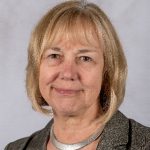 Lois S. Sadler, PhD, RN, FAAN is a Professor at the Yale University School of Nursing and Yale Child Study Center. Dr. Sadler received her BSN from the University of Massachusetts and her MSN from Yale University School of Nursing. She received her PhD from the UConn School of Family Studies in 1997.
 Eleanor Fisk completed her Ph.D. in HDFS in Spring 2023. She enrolled in the HDFS program in 2018 to work with Dr. Caitlin Lombardi on research about young children’s cognitive and social emotional development, family resources, and early care and education. During graduate school, Eleanor worked on numerous research projects, including longitudinal studies utilizing secondary data with Dr. Lombardi, a qualitative study on families’ and home visitors’ experiences with virtual home visiting supervised by Dr. Rachel Chazan Cohen, and an evaluation of family engagement and outcomes for a local Head Start agency led by Dr. Beth Russell. These experiences and mentorship helped Eleanor to shape her research interests around understanding the role of contexts in which early childhood development occurs and how programs and policies can support children and families experiencing socioeconomic disadvantage.
 Eminet Abebe Gurganus, PhD is a 2023 graduate of the HDFS doctoral program. She entered the program having earned her Bachelor’s and Master of Public Health degrees from Yale University. Her research interests pertain broadly to social determinants of health, with a specific interest in system-level interventions to address health inequities. Working with her advisor, Dr. Marlene Schwartz, she has investigated partnerships between the healthcare system and social services (e.g., food pantries) and how such partnerships can be improved and leveraged to better serve people in need. In her dissertation, she applied qualitative and quantitative methods to study the implementation of referral and linkage processes between healthcare and community-based organizations for patients experiencing needs such as food or housing insecurity.